Guacamole Deviled Eggs

eggsTried these out for the first time today, make adjustments or additions to suit your own tastebuds. Let me know if you find any delicious modifications!

  • One dozen hard boiled eggs
  • 1-2 Avocados
  • 1-2 tsp cumin
  • 1 tsp garlic powder
  • 1 tsp onion powder
  • 1 tsp paprika (+ more for sprinkling on top)
  • 1 tsp salt
  • 1/2 tsp pepper
  • crushed red pepper – to taste
  • juice of 1/2 – 1 lemon

Cut eggs in half. Mix yolks with avocado and all other ingredients, whipping with fork until smooth. Fill egg halves and sprinkle with paprika.

Lessons in Love

I think it was four or five days ago when Kevin said something along these lines: “Our anniversary is next week…and we didn’t request the night off or anything.” My reaction was something like: “Wow, it’s like this Wednesday right? Or is it Thursday?” It is crazy how life seemIMG_9520-2s to run away from us sometimes. I have noticed that over the years I seem to care less and less about celebrating my birthday. But I honestly don’t think anniversaries should fall into this category! So I would like to take the time on our nine year wedding anniversary to share some things I have learned (and am still learning) about love over these years.

Love is not something you fall in and out of, it is a choice you make every day. The love we have for our spouses can only become unconditional love when we choose to put them in the highest priority, second only to our relationship with God.

When you put your spouse in this postion, above kids, above friends, above activites, EVERYTHING underneath that relationship benefits and falls into place. (Easier said than done, as demonstrated in the opening conversation.) This is the relationship that sets the standard for our children for the rest of their lives, and I fully intend to continue to grow and be the best wife I can be so Charlie can learn from this. I try to remind myself of this everyday.

The grass wouldn’t be greener on the other side if you took care of the lawn you already have. Nurture your relationship! You have to spend time together to grow together. Learn from each other, don’t say things to intentionally hurt the other and don’t engage in hurtful conversations that arise. Don’t be afraid of change! If something is not working, work to change it! (Move the sprinkler, so to speak.)

But don’t try to change them. Any changing that will be done is not in your hands, it is in Gods hands. I pray all the time for patience and acceptance, and my belief in the power of prayer has made all of the difference in the world.

And now dear readers, feel free to tune out…but the rest is for my husband:

Kevin, thank you for always being there for me over the years. I have seen the furious devotion you have for me arise in even the darkest of times. I know that you truly love me with all that you have!

Thank you for always supporting me through some of the crazy ideas I have had over the years. I know I am one stubborn girl and there are always the things you have fought me tooth and nail on from your end, but you have never tried to stop ME from trying and that has made all the difference. (How can we ever forget the bakery “career”…epic fail…)

Thank you for making me a mother! Since our daughter has entered the world, I have felt the happiest times of our marriage and gone through one of the darkest times of our marriage. That little light in the center of our world has been more incredible than words can ever describe and I know that whatever trials enter our life we can always endure together, as a family.

Thank you for being such a great father! It has been incredible to watch you with Charlie. There are so many stories I hear about how some fathers won’t change diapers or are not even really involved with their kids at such a young age. You are the exact opposite and I am pretty sure I have fallen even more in love with you over the last six months.

And lastly for now, thank you for being YOU. You make me laugh, you make me smile, you always keep me on my toes, you make me crazy, you helped make me into the ME I am today.

Let The Sun Shine

sun

“Keep your face always towards the sunshine  – and the shadows will fall behind you.” ~Walt Whitman

These days I find myself frequently longing for a morning to sleep in, but between the evil plans of the pets and the baby…well this doesn’t happen much anymore. I often find myself laying in bed thinking about how much I hate 5:30 a.m. (especially on weekends), but at least grateful that the sun is up. Summer is my absolute favorite time of year. In light of the season upon us, I decided to take a moment to discuss getting the maximum benefits from what the sun has to offer.

One of the main reasons that the “flu season” comes up during the winter is because we are not getting enough sunshine. Or rather the vitamin D that comes with it. This directly affects our immune system. Vitamin D is necessary for optimal health, but there are very few food sources for this vital nutrient; so we evolved to absorb and use the suns UVB rays to produce it.

Unfortunately, modern society has us terrified of the sun. Most people spend all day inside with artificial light, and then when we do get outside, we layer on clothes or sunscreen to “protect” ourselves from the sun. Most of us know that vitamin D plays a role in keeping our bones and immune system healthy. We also now know that it plays a role in reducing the risk of things like cancer, cardiovascular diseases, diabetes and depression (seasonal depression in particular). There are approximately 20,000 genes in the human genome and Vitamin D controls over 2,000 out of them. So this means a deficiency in Vitamin D3 affects over 10% of the genes in your body. 


Let’s take a quick look at Vitamin D3’s links to our immune system and cancer.  One of the major players in cancer cells getting out of control is apoptosis (normal or programmed cell death). Cancer cells are always present in your body, but they are kept in check by how well our immune system functions. When these cancer cells begin to evade apoptosis and don’t die, they grow out of control, causing the cancer diagnosis.

Enter Vitamin D3, the guy is in charge of the P53 gene which is in turn responsible for causing apoptosis (cell death). A deficiency in Vitamin D3 affects this normal cell death, helping to create cancer. In fact, most cells of our immune system, (including macrophages, dendritic cells, T-cells, etc…) have a vitamin D receptor on their surface. This means that these cells NEED vitamin D. In order for the immune system to function properly, keeping cancer cells in check, these immune cells have to find vitamin D3 first! A deficiency in Vitamin D3 lowers the immune system allowing cancer to get out of control. Unfortunately we humans have become significantly deficient in this nutrient, (which is actually a hormone) because we try to obtain it all from food and supplement sources.


The fact is, unless you are eating a ton of wild caught salmon or knocking back a couple of tablespoons of cod liver oil every day (which I wouldn’t recommend in this dose…), you are probably deficient in vitamin D. Are you for sure deficient? The only way to know for sure if to get your blood vitamin D levels tested. Personally, I am opting to save a buck, assume that I am deficient, and take advantage of proper supplements and the free sun exposure whenever possible. The trick is to be smart about your sun exposure and supplementation.

Humans are meant to get sunlight, not to get sunburned. We just have to learn to be smart about it! Gradually increase  your exposure, and cover up if you feel like you are getting too much sun. The suns rays are designed to alert us when we are getting to much sun and certain sunscreens can turn off this alarm system, allowing us to bake under the deep penetrating UVA rays for longer than we normally would. Optimizing your diet will also in turn, help optimize your skin condition. Our sun protection is also meant to work from the inside, out. For more information on this topic, check this post from Mark Sisson. He gives great details on how your body can work to naturally protect you from sunburns.

A few tips for getting vitamin D:sun salmon

  • Supplementation – make sure you are taking D3, not D2, and research the source of your supplements! (Taking it along with fat will help your body put it to good use; so take it with fish oil and/or meals.) This is especially important in the winter, when exposure to natural sun is limited. 
  • Go for wild caught salmon, not farm raised. If buying canned, buy it with bones in it. 
  • Weather permitting, spend at least 10 minutes a day outdoors, letting the sun hit your skin. (Longer if you are darker complexioned)
  • Read/research your info, question everything and never stop learning!

•Note:  The information on this blog is for informational use only and is not meant to diagnose or treat any medical conditions or to take the place of your physician. Always consult the appropriate health care professional when you have health problems that you feel might require professional attention, or when adding supplementations, while taking existing prescriptions. 

References:

http://robbwolf.com/2011/09/03/let-a-little-sunshine-in/

http://www.wellnessandprevention.com/index.cfm/2011/7/14/Sun-Exposure-Cancer-Preventing-or-Cancer-Causing

http://www.marksdailyapple.com/8-natural-ways-to-prevent-a-sunburn-and-sunscreens-not-one-of-them/#axzz1wRgvedFL

http://www.westonaprice.org/cod-liver-oil/cod-liver-oil-basics

Charles, Majors, DC

Sugar High

I have to admit, as I transfer my old posts over from my old blog, I am enjoying reflecting back on some of these musings! Sugar is still something I struggle with, and this was an excellent reminder of why we should avoid it as much as possible.

sugarIf I were to challenge you to avoid added and refined sugars for 30 days, a few of you may think this to be no big deal. Personally, I have an admitted sugar addiction, and I initially found this entire concept down right frightening.

The word “addiction” is often thrown around loosely, but it seems to me that addictions are taken most seriously when they are associated with drugs and alcohol. The medical dictionary defines addiction as: “a persistent, compulsive dependence on a behavior or substance.” The opens up a very broad spectrum of possibilities.

A brief look at the science behind some of this:

  • Substance addictions in particular are linked to generating responses from two major neurotransmitters in the brain: dopamine and serotonin. These two chemical messengers affect a wide variety of things in our bodies, such as eating, sleeping, emotions and sexual behaviors. 
  • Drugs like LSD and ecstasy contain molecules that fit together like puzzle pieces with serotonin receptors, giving them a boost (Hanson 2007). Alcohol has been linked to direct interference with the function of serotonin receptors and/or increasing the release of serotonin, depending on the level of consumption (Lovinger, 1990). Marijuana reacts with a neurotransmitter (cannabinoids) that controls cravings, which in turn regulate dopamine pathways. Smoking a cigarette can even generate serotonin and dopamine responses (Cann, 2012). 

What does this all have to do with sugar? Sugar is a substance that not only triggers a response from both serotonin and dopamine, but also gets a reaction from cannabinoids. This seems like pretty good evidence that certain foods not only make use feel good during consumption, but actually make us crave them when the cannabinoids are released. Even artificial sweeteners can generate these responses (Cann 2012).

We all know that being under the influence of drugs and alcohol can impair our physical and mental functions. Drugs and alcohol can damage our bodies, especially if consumed in mass quantities over long periods of time. Sugar is no different, especially over time.

So you finish reading this blog and maybe decide to take me up on the 30 day challenge. It’s time to go through your cupboards and fridge and rid yourself of the offensive substance, so you begin reading labels…and you realize that sugar is a sneaky substance, showing up in many things, under many different names.

Glucose, fructose, sucrose…all types sugars, and all used differently in the body. High fructose corn syrup is such an evil substance, it deserves its own blog, but I will settle today for honorable mention. When I cleaned out my fridge, I found this cheap, highly processed filler listed as the number two ingredient in my catsup. Really?!?!

Some quick information on the three sugars mentioned above:

  • Glucose: Guided by our insulin, it is sent either to the cells in the body for immediate energy use or condensed and stored as glycogen in the liver or muscles for later use.  
  • Fructose: Processed almost entirely by the liver, with evidence of this extreme load associated to increasing risks of non-alcoholic fatty liver disease over time. This fun stuff is also linked to giving your appetite a boost, rather than satiating or suppressing it.
  • Sucrose: (a.k.a. Table Sugar) is one part fructose and one part glucose.

(For excellent details and further descriptions, check out Mark Sisson’s blog, Mark’s Daily Apple.)

The consumption of sugar can have confusing and conflicting information. Genetically speaking, we are simply not meant to consume refined sugars, especially not in the mass quantities that are available and marketed to us today.

Say you come across some sugar cane on a hike and you decide to stop and curb your sweet tooth. You would first have to chop it down, removed the tough wood exterior, then cut the interior into manageable pieces. Twenty minutes or so later, you can finally chew on the pieces of pulp, extracting the small amount of sugar, before having to spit out the fibrous remains. This kind of put a new spin on the packages of “natural cane sugar”  filling the shelves.

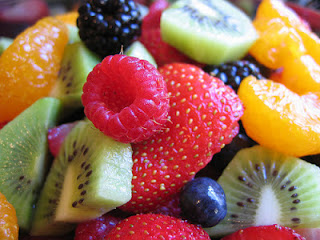
fruitWe are only meant to consume sugar naturally found in fruits and vegetables, that comes alongside many additional nutrients, and not as a primary source of energy. An interesting fact to consider here regarding carbohydrates; All carbs are converted and used in the body as glucose (aka sugar). What did we just learn about sugar? It is not meant to be the primary source of our energy. Fat is the genetically preferred source of energy for the human species. (For another excellent writeup, check out this link to Mark Sisson’s info on fat at Mark’s Daily Apple.)

It all comes back to choices and not making things too complicated. If you stick to eating real food, nothing man made, and completely cut out refined carbs such as white rice, white pasta, and white bread, you will automatically be cutting out a ton of added sugar.

There is so much information available on this topic, and it is impossible for me to fit everything I want to share in just this one writeup. I want to conclude with a brief list of information I learned from Dr. Steve Czys, on of some of the more negative effects sugar consumption can have on our bodies:

  • Refined sugars elevate glucose, which raises insulin, which leads to chronic diseases such as type 2 diabetes, heart disease and cancer.
  • Sugar destroys your immune system and fuels cancer.
  • Sugar is an anti-nutrient, providing insignificant amounts of vitamins and minerals and actually robbing your body of good nutrients. This causes diseases such as fatigue, ADD, ADHD, heart disease, diabetes, and cancers.

Until next time, thank you to all of my readers for sticking with me! Any requests or comments are welcome, I appreciate your insight.

REFERENCES:

Cann, Kevin. Might As Well Face It, You’re Addicted To…Food? Posted Feb. 29, 2012 to: www.robbwolf.com/2012/02/29/might-as-well-face-it-youre-addicted-to-food. Retrieved March 5, 2012

Sisson, Mark (2010) The Definitive Guide To Sugar, Posted May 5, 2010 to www.marksdailyapple.com. Retrieved March 5, 2012

Hanson, Dirk (September 21, 2007) Addiction Inbox: Serotonin and Dopamine: A Primer. Retrieved March 9, 2012

Lovinger, David M. Ph.D. (1999) The Role of Serotonin in Alcohol’s Effects on the Brain.

Current Separations; University School of Medicine  Vanderbilt, Nashville, TN.  Department of Molecular Physiology and Biophysics. Retrieved March 9, 2012

Question Everything!

breakfast_of_diet_pillsGrabbing an actual paper copy of a newspaper is a pretty rare thing for me in this technological age. One of the last ones I grabbed was for the sole purpose of cutting out an advertisement I had designed for my portfolio. Before I could even open it to begin searching for my ad, a front page headline grabbed my eye.

Does and miracle diet pill exist? A safe drug is elusive.”  (Click the link for the full story.)

This article jumped out at me primarily because of the fact that I personally don’t like pills, but I also found myself thinking; “of course a safe drug is elusive, it doesn’t exist.” The article touched on so many things I am passionate about in my own life, and I felt compelled to write about them.

Now, I originally wrote this as a letter to the editor, only to be hampered by a 250 word limit. I am slightly irritated with whomever set this limit – because they apparently do not know me at all. So I decided to postpone all other musings and share my thoughts about the crap that is making the front page.

The article first talks about how scientists have been trying for over a century to make a pill that will help someone lose weight without side effects, and that a government panel is urging the FDA to approve the latest miracle pill, Qnexa. It goes on to state that, “The recommendation raises hopes that the U.S. could approve the first anti-obesity drug in more than a decade,” also mentioning the challenges that come with figuring out how to “create a pill that fights fat in a variety of people.”

This waste of time and resources not only disturbs me, it completely blows my mind. Humans. Are. Animals. If someone want’s to lose weight, they simply need to look at the laws that govern all mammalian species; diet, environment and lifestyle.

In February of 2011, the Environmental News Network (ENN) published a story about heart disease being the number one killer of male gorillas in captivity. After heart failure claimed the life of a 21 year old gorilla at Cleveland Metroparks Zoo in 2005, a team of researches decided to step in and take a look at the gorilla’s lifestyle. They found that the animals were being fed “bucket loads of high vitamin, high sugar, and high starch foods to make sure they got all their nutrients.”

Did these researchers recommend a pill to help the gorillas? Of course not, that would be ridiculous. They put the gorillas on a diet of foods that they would normally eat in the wild; their natural diet, consisting of things like romaine lettuce, green beans and flax seeds. This change yielded many positive results for all of the gorillas, one of which involved weight loss of 65 pounds each. I wonder how different our lives would be if we had spent a centuries worth of time and money teaching people how to eat and exercise in way that is appropriate for our specific species?

The article quotes a Dr. Mitchell Roslin, who said that “Having a drug for obesity would be like telling me you had a drug for the fever.” I had a moment of false hope, thinking this was beginning to be spoken in a language I understand.

Then Roslin stated that there can be millions of reasons, with “various underlying mechanisms” that result in obesity. This statement gave me pause. Roslin, as a chief of bariatric surgery, has chosen a career focused on weight loss surgery, and is likely very invested in the possible underlying causes of obesity. I am not doubting the Dr.’s intentions at all, but what if we can start with something much more simple? Science and hormones aside, I truly believe it can be as simple as this; Eat real food, take a walk, and don’t let anyone tell you that you are broken beyond repair.

I am not a scientist, or a doctor, but at one point in my life I was about 40 pounds overweight. I hated the way I looked, I started having anxiety attacks, and eventually became depressed. Doctors with good intentions looked at my family history of anxiety and depression, then put me on a variety of medications that came with side effects that left me wanting the anxiety attacks back. I finally decided I did not want to live my life like that. I took it upon myself to learn as much as I could about natural relief and what I put into my body.

What I have since learned is that the underlying causes of these ailments were not in my genetics. Our genes are designed to seek homeostasis, they adapt and improve over time, provided they are getting what they need. The causes were simply ignorance and poor lifestyle choices; Both of which I have complete control over and neither of which were fixed by the plethora of little white pills prescribed to me.

Dr. David Katz, of Yale University’s Prevention Research Center is quoted talking about how throughout history, calories were often hard to come by, and that “We have no defenses against overeating because we never needed them before.” I would love to know what contextual information is surrounding this statement and what type of research he is basing it off of.

steakWhat I do know is that there is quite a bit or research that shows the human body has several defenses against overeating, as long as you are eating real, whole food. In his opening to The Protein Debate,  “The Evolutionary Basis for the Therapeutic Effects of High Protein Diets” Colorado State University professor, Loren Cordain, tells us that consuming dietary protein is one of these defenses. There are three primary macronutrients, fat, protein, and carbohydrate. Of these three, protein causes the greatest release of an appetite reducing hormone found in the gut, called Peptide YY. It also simultaneously improves sensitivity to leptin (yet another appetite controlling-body weight regulating hormone) in the central nervous system. Now, I can’t speak for everyone, but if I had to choose between a big juicy steak and and a pill that may come with nausea, headaches and vomiting…I am picking the steak every time.

Not necessarily wanting to counter my own argument, but the human body is complicated. While it does adapt, there are things that can happen, such as leptin resistance, that really can make it harder for someone to lose weight. I believe it is important to address these issues, while still applying our personal choices. Does this mean you just give up and keep living the same lifestyle that got you here? I sincerely hope not. Start with something simple. Recognize that sugar is an addiction, and that eating just one cookie really might be a bad idea, especially in the beginning. Moderation is not always key, and in our society it may actually be helping your metabolic disorder.

The article ends with mention of the 1930’s failed drug, dinitrophenol, that increased metabolism, but also caused things like “fever, swelling and deadly toxicity…” The Food and Drug Administration was then established as a line of defense against untested drugs in 1938.

What I really wish was mentioned in this article are the extreme changes in WHAT we are eating that have taken place, just in the last century alone. In the beginning of our existence, humans used to have to expend energy to hunt, gather and prepare real food. There were no supermarkets with carts to carry our food for us, not to mention a selection of food mixed in with an even larger selection of chemicals masquerading as food. Think back to even just 50 years ago when there was no such thing as organic, grass-fed or free-range. Why, you might ask? Because EVERYTHING was organic, and animals were fed their natural diets. In the end, it is simply our choices that matter the most.

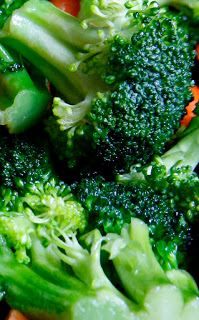
broccoliPicture a big bowl of broccoli sitting next to a big bowl of chicken nuggets. We all know the broccoli is the healthy selection, but who will actually make the choice to eat the broccoli? If you do, and proceed to eat the whole bowl…well I would be shocked to find one person that has ever gotten fat because they ate too much broccoli.

Personally, I am confused as to why the chicken had to be processed down, chemically altered, breaded and fried into a nugget, when the thigh or breast was fine just how it started.

To those of you who have put up with me long enough to get to this point, I invite you to take control of your own life. Educate your to make better choices, and don’t just go on a diet, change your lifestyle. Give yourself a chance to not just survive this life, but to thrive and enjoy everything it has to offer. Maybe the next time a headline about a diet pill grabs your attention on the front page, you will be asking different questions.